High blood pressure care in Brookfield
High blood pressure rarely causes symptoms, but it strains your heart, brain and kidneys. Dr. Ghani and Dr. Gill help adults and older adults find it, track it and bring it down safely.
- Medicare accepted
- Dr. Ghani and Dr. Gill
- Brookfield, IL
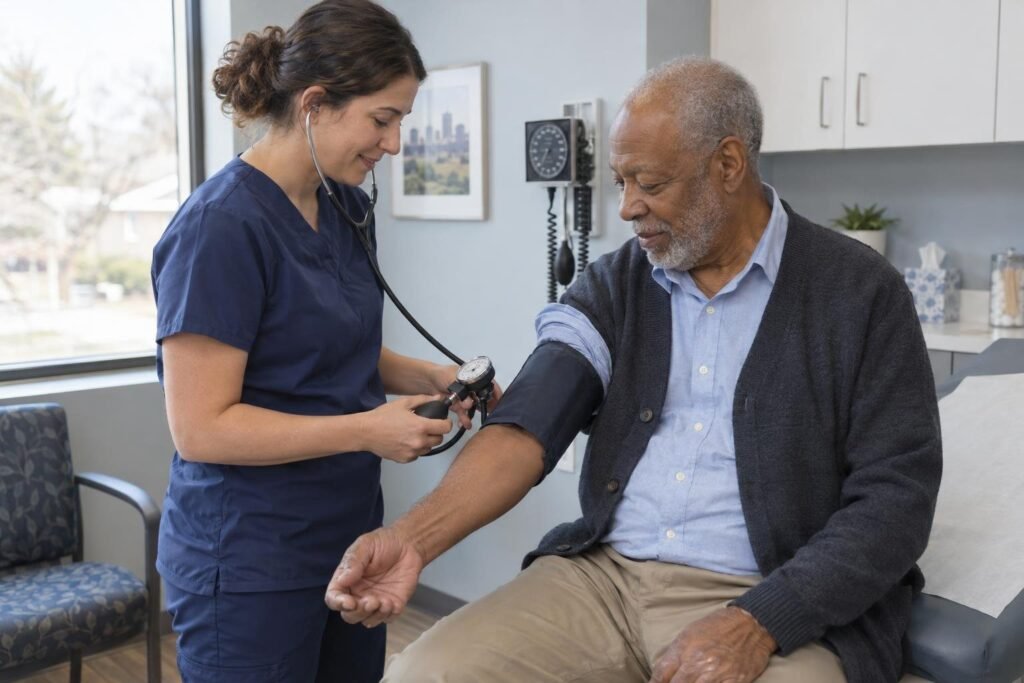
High blood pressure means your blood pushes too hard against your artery walls. The American Heart Association calls 130/80 or higher high blood pressure. Most people feel no symptoms. At Maple Medical Center in Brookfield, our doctors check your pressure and review your home readings and medicines. We can also do an EKG in our office.
The two numbers in a blood pressure reading
A reading has two numbers, such as 128/76. The top number is the pressure when your heart beats. The bottom number is the pressure when your heart rests between beats.
Either number can be too high. The American Heart Association (AHA) sorts readings into the groups in the table below.
One high reading does not mean you have high blood pressure. Your doctor looks at several readings over time. Home readings help, since they often give a truer picture than one office visit.
If a reading is higher than 180/120, wait one minute and check again. If it is still that high, call your doctor right away.

What your numbers mean
| Category (American Heart Association) | Top number | Bottom number |
|---|---|---|
| Normal | Less than 120 | and less than 80 |
| Elevated | 120 to 129 | and less than 80 |
| High blood pressure, stage 1 | 130 to 139 | or 80 to 89 |
| High blood pressure, stage 2 | 140 or higher | or 90 or higher |
| Severe high blood pressure | Higher than 180 | and/or higher than 120 |
Why blood pressure matters
Most people with high blood pressure feel nothing at all. The CDC says measuring is the only way to know you have it.
Over years, high pressure damages blood vessels. It raises your risk of stroke, heart attack, heart failure and kidney disease. It is also linked to memory problems and dementia.
Blood pressure tends to rise with age. Family history, extra weight, salt, too little activity, alcohol and some medicines can all play a part. Kidney problems and sleep apnea can raise it too.
The good news is that control helps. Keeping your blood pressure in a healthy range can help prevent or delay these problems.
How we check and manage your blood pressure
We check it in the office
We take your blood pressure at your visit and may repeat it. Arrive a few minutes early so you can sit and rest first.
We look at your home readings
Bring your written log and your home monitor. We can compare your monitor with our reading to see if it is accurate.
We look for causes and effects
Blood drawn in our office can check your kidneys, blood sugar and cholesterol. An EKG in our office shows your heart rhythm and possible signs of strain.
We make a plan together
Your plan may include lifestyle changes, medicine or both. Your doctor sets a goal that fits your age and health.
We follow up
Getting blood pressure right can take a few visits. We adjust your plan until it is working for you.
How to measure your blood pressure at home
Home readings show us your usual pattern. These steps come from the American Heart Association and the CDC.
- Use an upper-arm cuff that fits your arm. Wrist and finger monitors are less reliable.
- For 30 minutes before, skip caffeine, smoking and exercise. Empty your bladder first.
- Sit quietly for 5 minutes with your back supported and both feet flat on the floor.
- Rest your arm on a table so the cuff is at heart level.
- Put the cuff on bare skin, not over a sleeve.
- Stay quiet. Take two readings, one to two minutes apart.
- Measure at the same times each day, such as morning and evening, and write the numbers down.
- Bring your monitor and your log to your visits.
Everyday habits that help
Small, steady habits can lower blood pressure. They work best when you keep them up over months and years. Even modest changes, like losing a little weight or walking more, can help.
Eat less salt. Much of it hides in bread, canned soup, deli meat and restaurant food. Fill up on vegetables, fruit, beans, low-fat dairy and whole grains. This way of eating is called the DASH eating plan.
Move most days. A daily walk counts. Limit alcohol, stop smoking and aim for good sleep.
If weight is part of the picture, ask about our medically supervised weight-management programs.
Blood pressure medicines
Many people need medicine to reach their goal. There are several types, and many people take more than one. Your doctor chooses based on your health, your other conditions and any side effects.
Take your medicine every day, even when you feel fine. Please do not stop it because a home reading looks good. That good reading may be the medicine working.
Bring all your medicines to your visits, including cold remedies and pain relievers. Some over-the-counter products can raise blood pressure.
Blood pressure medicines can have side effects, such as dizziness, swollen ankles or a cough. Tell us if something feels off. A different medicine may suit you better.
Dizzy when you stand up? Tell us.
Some older adults feel dizzy or lightheaded when they stand up. This can happen when blood pressure drops too low. Blood pressure medicines can play a part.
Older adults are more likely to have low blood pressure, says the National Heart, Lung, and Blood Institute. It can lead to fainting and falls.
Get up slowly, and sit on the edge of the bed for a moment before you stand. Ask us to check your blood pressure sitting and standing. Your medicine or dose may need a change. Drinking enough fluids can help too, unless your doctor has told you to limit them.
Insurance and your visit
We accept many insurance plans, including Medicare, but not every plan. Call (708) 485-4050 and we’ll check yours before your visit. You can also read our insurance page.
Blood pressure often travels with diabetes and high cholesterol. Learn how we handle them together on our chronic disease care page.
Questions we hear about blood pressure
What is a normal blood pressure for a senior?
The American Heart Association uses the same categories for all adults. Normal is below 120/80. Your own goal depends on your health and how you feel on treatment. Your doctor will set it with you.
Is my home blood pressure monitor accurate?
It can be, if it is a good upper-arm monitor and the cuff fits. Bring it to your visit and we can compare it with our reading. The AHA suggests checking validatebp.org for monitors tested for accuracy.
Why is my blood pressure higher at the doctor's office?
Some people feel tense at the doctor, which can raise the reading. This is often called white coat high blood pressure. Home readings help us see your usual numbers.
Can I stop my medicine once my numbers are normal?
Please don’t stop on your own. Normal numbers often mean the medicine is working. Talk with your doctor first, since sometimes a dose can be lowered safely.
What does an EKG show?
An EKG records your heart’s electrical activity. It can show your heart rhythm and signs that your heart has been working harder than normal. We can do an EKG here in our office.
Does high blood pressure cause headaches?
Usually not. The American Heart Association says high blood pressure rarely causes headaches or nosebleeds unless it is severe. That is why regular checks matter more than how you feel.
How often should I check my blood pressure at home?
Ask your doctor what fits you. Many people check in the morning and evening, taking two readings each time. When a medicine is new or changing, we may ask you to check more often.
Related care
Chronic condition care
Chronic diseases are health conditions that last a long time, like diabetes or high blood pressure. Our internal medicine doctors help adults and older adults keep them under control, year after year.
Learn more ›Diabetes care
Dr. Ghani and Dr. Gill help adults and older adults keep type 2 diabetes under control. We check your numbers, review your medicines and talk through food choices with you.
Learn more ›In-office testing
Several tests your doctor may order can be done right here in our office on Ogden Avenue. That can mean fewer trips to other buildings.
Learn more ›Care for older adults
Health care often gets more involved after 65. There are more medicines, more doctors and more questions. Our internal medicine doctors help older adults and their families keep it all in one place.
Learn more ›Ready to see a doctor who knows you?
Call our Brookfield office and our team will find a time that works for you. We accept many insurance plans, including Medicare, but not every plan. We’ll check yours before your visit.
Important information
This page is general information, not medical advice. Please do not stop or change a blood pressure medicine without talking with your doctor. If a reading is over 180/120 with chest pain, trouble breathing, weakness, numbness or trouble speaking, call 911.