In-office tests in Brookfield
Several tests your doctor may order can be done right here in our office on Ogden Avenue. That can mean fewer trips to other buildings.
- Medicare accepted
- Dr. Ghani and Dr. Gill
- Brookfield, IL
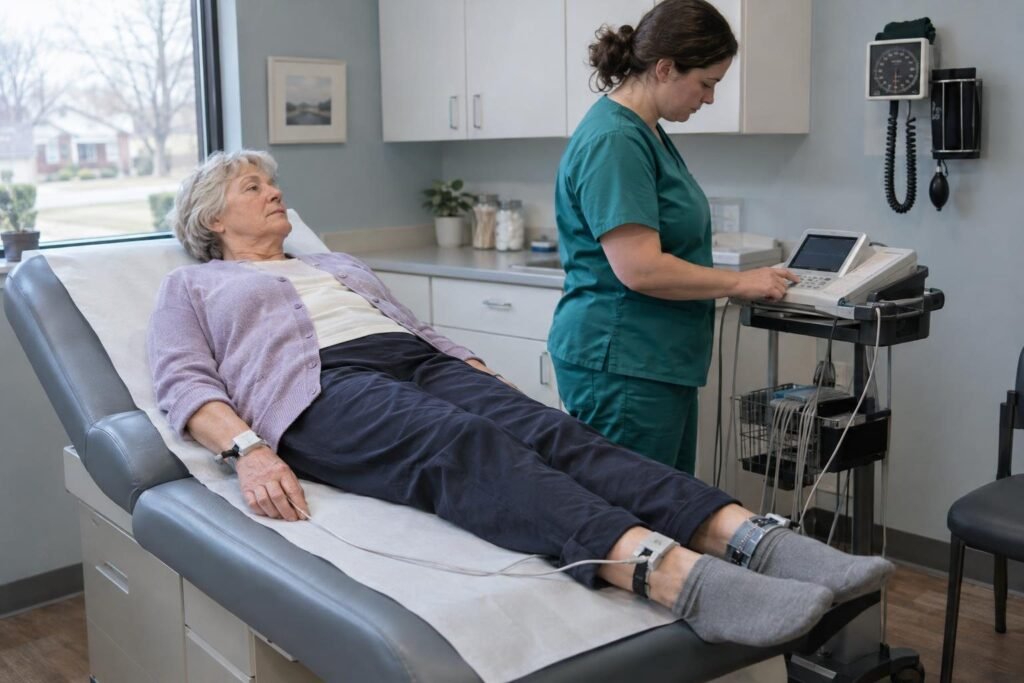
Maple Medical Center in Brookfield offers several tests in the office: EKG, X-rays, blood draws for lab work, hearing tests, breathing (pulmonary function) tests, metabolism testing and ear cleaning. Your doctor orders a test to find, rule out or keep watch on a health problem. Most need little preparation. We’ll tell you if you need to fast.
Why your doctor orders a test
A test gives your doctor information that an exam alone can’t. It can help find a problem early, rule one out, or show whether a treatment is working.
Dr. Ghani or Dr. Gill will tell you what a test looks for and why it matters for you. If anything is unclear, please ask. You should understand each step of your care.
Some tests are part of routine care for long-term conditions, such as diabetes or high blood pressure. Others are ordered because of a new symptom.
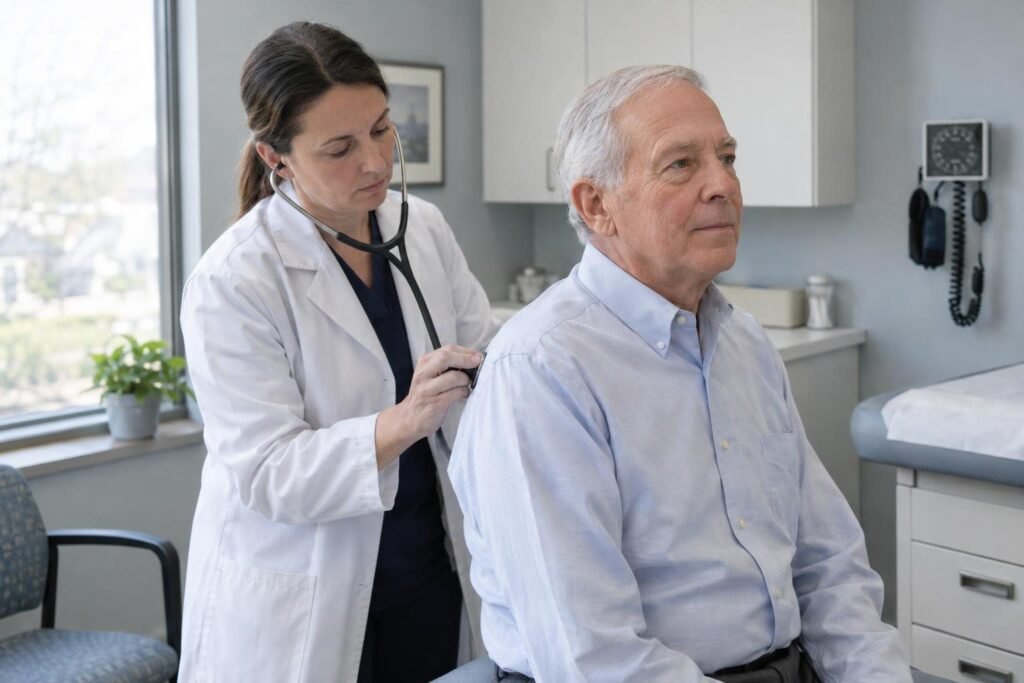
Tests we offer in the office
| Test | What it checks | How to prepare |
|---|---|---|
| EKG (electrocardiogram) | Your heart’s electrical signals and rhythm | Nothing special. Tell us every medicine and supplement you take. |
| X-rays | Pictures of bones and some organs, such as the lungs | Little or none. You may be asked to remove jewelry. |
| Lab blood draw | Things like blood sugar, cholesterol, blood counts, and kidney and liver health | We’ll tell you if you need to fast. Keep taking your medicines unless told otherwise. |
| Hearing test | How well you hear sounds in each ear | No preparation needed. |
| Pulmonary function (breathing) test | How much air you can blow out, and how fast | Wear loose clothes. Skip large meals for two hours before. Ask about your inhaler. |
| Metabolism testing | How your body uses energy from food | Ask when you book. Instructions depend on the test. |
| Ear cleaning | Removes built-up ear wax that can block hearing | Don’t use cotton swabs. Tell us about any ear surgery or eardrum problems. |
When a doctor might order each test
EKG
Your doctor may order one for chest pain, a racing or uneven heartbeat, dizziness or shortness of breath. It’s also used before some surgeries and to check heart medicines.
Breathing test
This test can help explain shortness of breath, wheezing, coughing or a tight chest. It’s also used if you have a known lung condition.
Hearing test
Consider one if people seem to mumble, or phone calls are hard to follow. Ringing in the ears, or a TV others find too loud, are other reasons.
X-rays
X-rays are often used to check for broken bones. A chest X-ray can help find pneumonia.
Blood tests
Blood work can screen for problems before symptoms start. It also shows how well treatment for a long-term condition is working.
Learn more ›Blood tests and fasting
Many blood tests need no special preparation. Some, such as certain blood sugar and cholesterol tests, are more accurate if you fast first.
Fasting means nothing to eat or drink except water, often for several hours or overnight. We’ll tell you if you need to fast, and for how long.
For some tests, you may also be asked to skip alcohol, heavy exercise or smoking beforehand. Don’t overeat the day before. We’ll give you any special instructions.
If you didn’t follow the instructions exactly, please tell us. Even a small change can affect your results.

How to get ready
A little planning makes test day easier.
- Bring a list of all your medicines, vitamins and supplements
- Bring your insurance card and photo ID
- Wear loose, comfortable clothes, especially for an EKG or breathing test
- Drink water before a blood test, unless we tell you not to
- Pack a small snack to eat after a fasting blood test
- If you use an inhaler, ask whether to use it before a breathing test
- Write down any questions you want to ask
What happens on test day
Check in
Let the front desk know which test you’re having and how you prepared.
Ask questions first
Tell us if anything worries you, or if lying flat or standing is hard for you.
Have the test
EKGs, hearing tests and X-rays are painless. A breathing test can make you cough or feel light-headed for a moment.
Go about your day
After most tests, you can go back to your normal activities right away. Eat something if you fasted.
Get your results
Ask how and when you’ll hear about your results. Your doctor will explain what they mean for you.
Medicare, insurance and your tests
Medicare Part B covers diagnostic lab tests when your doctor orders them and they’re medically necessary. It also covers some screening tests, often with limits on how often.
For example, Medicare covers heart screening blood tests for cholesterol and triglycerides once every five years. If a test is done more often than your plan allows, you may owe for it.
Medicare Advantage and other plans have their own rules, so please call to check your plan. We accept many insurance plans, including Medicare, but not every plan. Call (708) 485-4050 and we’ll check yours before your visit. You can also read our insurance page.
One building, fewer trips
Having these tests in our office can save you an extra drive to another building. That matters when getting around isn’t easy.
You’ll find us at 9223 Ogden Ave in Brookfield. We’re in the red-brick building at the corner of Ogden Avenue and Arthur Avenue.
Please call ahead to confirm your test is available for your visit. If you need a test we don’t offer, your doctor will explain the next step.
Questions we hear about in-office testing
Can I drink coffee before a fasting blood test?
Not if you’ve been told to fast. Fasting means nothing to eat or drink except water. Plain water is fine unless we tell you otherwise.
Should I take my usual medicines before a test?
Yes, unless your doctor tells you to stop one. Some medicines can affect results, so tell us everything you take, including vitamins and supplements. If you use insulin or another diabetes medicine, ask us what to do on a fasting morning.
Does an EKG hurt?
No. Small sticky sensors go on your arms, legs and chest while you lie still. The machine only records your heart’s signals; it doesn’t send electricity into your body. Your skin may feel a little irritated when the sensors come off.
Will a breathing test be hard for me?
You’ll take a deep breath and blow out as hard as you can into a mouthpiece. Some people cough or feel light-headed for a moment. Tell us before you start if you have any concerns.
Can I have my test at the same visit as my appointment?
Sometimes, but we can’t promise it. Ask when you book whether your test can be done at your visit. Ask, too, whether you need to fast.
What if my EKG isn't normal?
An EKG alone can’t diagnose a heart condition. Your doctor looks at it together with your history and any other test results. You may need more tests before your doctor can tell you what’s going on.
What is metabolism testing?
Metabolism is how your body gets energy from food. Your doctor will explain which test you’d have and why it fits your care. Ask when you book how to prepare.
Why would Medicare not pay for a blood test?
Medicare Part B pays for lab tests your doctor orders because they are medically needed, and for some screening tests at set time intervals. A test may not be covered if it is done more often than Medicare allows, or if it isn’t tied to a covered reason. If you’re unsure, ask us before your test.
Related care
Preventive care & screenings
Preventive care helps find health problems early, often before you notice anything. Our doctors help adults and older adults know which screenings fit their age and history.
Learn more ›Physical exams
A yearly physical is a chance to check how you are doing and catch problems early. We also do pre-employment and work physicals for adults.
Learn more ›Chronic condition care
Chronic diseases are health conditions that last a long time, like diabetes or high blood pressure. Our internal medicine doctors help adults and older adults keep them under control, year after year.
Learn more ›Minor procedures & wound care
Some small health problems can be handled right in our office. This page explains what we do here, and when another setting is the better choice.
Learn more ›Ready to see a doctor who knows you?
Call our Brookfield office and our team will find a time that works for you. We accept many insurance plans, including Medicare, but not every plan. We’ll check yours before your visit.
Important information
This page is general information, not medical advice. Your doctor will decide which tests are right for you. If you have chest pain, severe shortness of breath or other signs of an emergency, call 911.